
Author name: companion services inc

Understanding Brings Comfort: Choosing Knowledge Over Fear

Understanding Brings Comfort: Choosing Knowledge Over Fear As we grow older, it’s natural to face moments of uncertainty. Changes in health, routines, or independence can sometimes bring worry or unease. But many fears don’t come from what is happening—they come from what we don’t yet understand. When something feels unfamiliar, our minds often imagine the worst. Unanswered questions can turn small concerns into heavy burdens. Yet when we take time to understand what’s happening, fear often softens. Knowledge brings clarity, and clarity brings comfort. Why Fear Feels Stronger When We Feel Alone Fear tends to grow in silence. When questions go unasked or concerns go unshared, worries can feel overwhelming. This is especially true when facing changes later in life. Talking, learning, and having someone walk beside you can make even difficult situations feel more manageable. Understanding doesn’t mean having all the answers. It simply means taking one step at a time—asking questions, listening, and learning together. The Importance of Companionship and Understanding Companionship plays a powerful role in easing fear. Having someone to talk to, to explain things gently, or to simply sit and listen can bring reassurance. When people feel understood, they feel safer. When they feel supported, they feel stronger. At its heart, companion care is about more than assistance—it’s about connection. It’s about helping individuals feel informed, respected, and confident in their daily lives. A Message for Older Adults and Their Families Understanding replaces fear with peace. When concerns are met with patience and kindness, confidence grows. Whether it’s navigating daily routines, health changes, or emotional well-being, no one should have to face uncertainty alone. Choosing understanding—through conversation, companionship, and care—creates a calmer, more secure way of living. Moving Forward with Reassurance Life doesn’t become easier because challenges disappear; it becomes easier because we don’t face them alone. When understanding is shared, fear has less room to grow. At Companion Services Inc., we believe that reassurance begins with listening, learning, and walking together—every step of the way.

Understanding Brings Comfort: Choosing Knowledge Over Fear Read More »

Our Approach to Dementia Care: Understanding That Brings Comfort

Our Approach to Dementia Care: Understanding That Brings Comfort At the heart of our dementia companion services is a simple belief: fear is often eased when understanding and reassurance are present. Living with dementia can make the world feel confusing and unpredictable, but compassionate, informed support can bring a sense of calm and safety. We believe that care should never feel rushed or impersonal. Every individual deserves to be met with patience, dignity, and respect—especially during moments of uncertainty. Understanding Before Action Changes in memory, communication, or behaviour are often expressions of confusion rather than distress. Our approach is to understand first, rather than react quickly. By taking time to listen, observe, and respond gently, we help reduce anxiety and build trust. Understanding allows us to see the person beyond the diagnosis. It reminds us that each individual has a life story, preferences, and routines that deserve to be honoured. Reducing Fear Through Familiarity and Reassurance Fear can grow when routines change or surroundings feel unfamiliar. Consistent companionship, familiar faces, and gentle explanations help restore a sense of security. Small moments—sharing a conversation, enjoying music, or simply sitting together—can have a powerful calming effect. Our companion carers focus on creating steady, reassuring environments where individuals feel safe and supported throughout their day. Supporting Families with Compassion and Knowledge We understand that dementia affects the whole family. Uncertainty and worry are common, especially following a diagnosis or during times of change. We believe families deserve clear communication, emotional support, and reassurance that their loved one is being cared for with kindness and understanding. By sharing knowledge and offering consistent companionship, we help families feel more confident and less alone on their care journey. A Philosophy Rooted in Dignity and Connection Dementia does not remove a person’s need for respect, comfort, or meaningful connection. Our care philosophy is grounded in understanding, empathy, and human connection. When individuals feel understood, fear has less space to take hold. Through compassionate companionship, we aim to create moments of calm, confidence, and continuity—every single day. At Companion Services, understanding, patience, and human connection guide how we support individuals living with dementia and the families who care for them.

Our Approach to Dementia Care: Understanding That Brings Comfort Read More »

When State Borders Block Compassion: Why Hospice Access Should Not Depend on Where a Patient Lives

When State Borders Block Compassion: Why Hospice Access Should Not Depend on Where a Patient Lives When a person is nearing the end of life, the focus should be compassion, comfort, and dignity — not paperwork, licensing restrictions, and insurance complications. Yet across the United States, patients are silently suffering because of a problem few people know exists: A doctor treating a patient in one state often cannot certify or order hospice care if the patient’s legal address — and insurance — are based in another state. This policy contradiction creates heartbreaking consequences. It prevents terminally ill patients — even those actively being treated by a trusted physician — from receiving hospice or palliative care simply because they reside across a state line. This issue is especially painful in tristate regions like New York, New Jersey, and Connecticut, where tens of thousands of patients cross borders every year for specialty care in NYC. They come for expert physicians, advanced hospitals, and life-saving treatments. But when treatment ends and comfort should begin, many are stunned to learn: “Your doctor cannot certify you for hospice because your legal residence and insurance are in another state.” At the most vulnerable moment in a person’s life, bureaucracy replaces compassion. A System That Worked Against the Patient Let’s consider a real-world example: A New Jersey resident receives cancer treatment at a leading medical center in Manhattan. Their oncologist — the doctor who knows their case, their treatments, their pain levels, their declining stability — recommends transitioning to hospice. Together, they discuss comfort care, pain management, quality of life, and dignity in their final days. But when the family attempts to initiate hospice, they discover: The New York doctor is not authorized to certify hospice eligibility for a New Jersey resident. The hospice agency cannot accept the certification because the physician is not licensed in the patient’s home state. Insurance will not approve hospice unless the certifying doctor meets state requirements. The family must now find a new doctor — a stranger — at the last moment of life simply to sign paperwork. This is not healthcare — this is a system forcing families to scramble while someone they love is dying. How We Got Here — And Why It No Longer Makes Sense The rule was originally built for structure and accountability. Medical licensure is state-based, and hospice is regulated inside each state’s healthcare system. However — modern healthcare has changed. Patients travel for cancer care. Patients cross borders for specialists. Patients relocate to be near family caregivers. Families move loved ones into their home to keep them safe. The laws did not evolve with the realities of patient care. The result? Patients are penalized — not protected. The Human Cost of a Paperwork Barrier What Needs to Change This restriction causes: Delays in pain medication Delays in hospice equipment and supplies  Delayed emotional and spiritual support  Delayed family training for end-of-life care  Unnecessary suffering in the final hours For many families, those delays are irreversible. You cannot “make up” lost time at the end of life. This issue is solvable. We are calling for: Federal recognition or reciprocity for hospice certification If a physician can treat a patient across state lines, they should be able to comfort them across state lines. Emergency end-of-life waivers When the patient is actively dying, bureaucracy should not determine access to compassion. A cooperative certification model Allows out-of-state treating physicians to co-certify with an in-state partner. Legislative attention Hospice care is a right of dignity, and dignity should not stop at a border. This is not a partisan issue — it is a human issue. Conclusion: Compassion Should Not Require a Zip Code Match Hospice exists to relieve suffering. To provide dignity. To honor the final chapter of a person’s life. No family should learn — when death is near — that state lines matter more than humanity. It is time to modernize this outdated system and remove the barriers that punish people for being sick in the “wrong” place. Because in the final days of life, Comfort should not depend on geography.

When State Borders Block Compassion: Why Hospice Access Should Not Depend on Where a Patient Lives Read More »

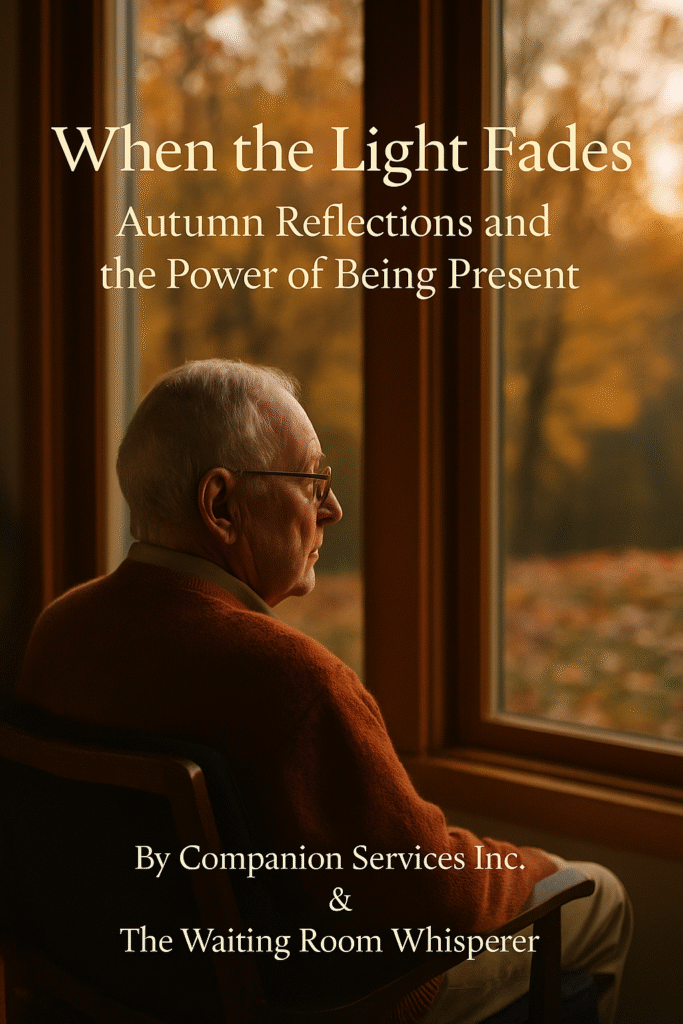
When the Light Fades: Autumn Reflections and the Power of Being Present

When the Light Fades: Autumn Reflections and the Power of Being Present By Companion Services Inc. & The Waiting Room Whisperer As the golden hues of autumn settle in, something else begins to quietly shift. The days grow shorter. The evenings arrive too soon. Shadows stretch longer, and with them, a familiar feeling can creep in—loneliness, melancholy, or a subtle sense of fading into the background. For many older adults, the fall season doesn’t just bring falling leaves. It brings a deeper emotional shift—one that isn’t always easy to name, but is often deeply felt. “There’s something about the early dark that makes the silence louder.” — The Waiting Room Whisperer The Emotional Weight of Less Light As daylight disappears earlier each evening, so does the sense of connection for many seniors. The porch visits end sooner. The phone calls slow down. A walk around the block becomes harder to fit in before the sun sets. The world feels like it’s closing in just a little. This time of year can trigger what experts call Seasonal Affective Disorder (SAD), but even without a diagnosis, the emotional effects of reduced sunlight and isolation are real—especially for those living alone or with limited mobility. Seniors may not say it outright, but they feel it: More silence. Less interaction. Fewer invitations. More time to remember who isn’t around anymore. This Is Where Companion Care Makes All the Difference At Companion Services Inc., we believe presence is powerful—especially when the world grows quiet. Our caregivers are trained to recognize the emotional rhythms of each season. In the fall, we don’t just show up—we lean in. We bring: Warm conversation when the house feels too quiet. Shared walks before the early dusk. Cozy rituals like tea, baking, puzzles, or music. Light, laughter, and life into homes that might otherwise sit in shadow. It’s not just about running errands or managing medications. It’s about companionship that lifts spirits and fills the silence with meaning. “Sometimes, all a person needs is someone to sit beside them in the fading light and say, ‘I see you. I’m here.’” — The Waiting Room Whisperer How Families Can Help Even if you live far away or your schedule is full, there are small ways you can keep the emotional warmth glowing for your aging loved ones: Call more often during the evening hours. Loneliness peaks when the sun goes down. Send care packages with books, cozy socks, seasonal snacks, or framed photos. Ask reflective questions. “What was fall like when you were a child?” invites storytelling and connection. Set up companion care for consistent, meaningful human contact. Autumn Doesn’t Have to Be Lonely The beauty of fall shouldn’t come with a side of sadness. With the right care, presence, and companionship, this season can be a time of peace, reflection, and connection—not just loss. Let us be the light when the daylight fades. Ready to bring warmth and connection into your loved one’s home this season? Companion Services Inc. is here to help. Call us today at (646) 701‑3873 Email: companionservicesinc@gmail.com Companion Services Inc. Homecare with Heart. Compassion with Purpose. In partnership with The Waiting Room Whisperer — listening between the lines, always.

When the Light Fades: Autumn Reflections and the Power of Being Present Read More »

The Silent Pain of Aging: Feeling Invisible

The Silent Pain of Aging: Feeling Invisible By Companion Services Inc. “Do you know what the hardest part of getting older is?”“What?”“It’s becoming invisible.” When we’re young, we are somebody—radiant, strong, funny, full of life. People notice. They remember.You’re the teacher who inspired generations.The engineer who built bridges.The artist who lit up rooms with imagination.The mother who held a family together.The friend who always showed up. But as the years pass, those colors can fade—not in your heart, but in how the world sees you. Suddenly, you’re not the person with stories, skills, and soul. You become the old man in a jacket, the grandma in a worn-out sweater. You still breathe. You still feel. But somehow, you’ve disappeared. No one asks about the dreams you once chased.No one sees the life behind your eyes.And that hurts more than people realize. We See You At Companion Services Inc., we believe aging should never mean being forgotten. Our mission is rooted in one simple but profound truth: Every person deserves to be seen. That’s why our caregivers do more than assist with daily tasks—they connect. We ask about the dreams, the memories, the passions. We listen. We laugh. We notice. Because no one is “just” an old man.No one is “just” a grandmother. You are someone. And your life still matters deeply. What Makes Companion Services Inc. Different? Heartfelt CompanionshipOur caregivers are matched not just for skill, but for personality and warmth. We build trust and friendship, not just routines. Respect for the Whole PersonWe take the time to learn each client’s story, honoring who they were—and who they still are. Customized Homecare SupportFrom companionship to meal prep, medication reminders, errands, and beyond, we tailor care to fit each individual’s unique lifestyle. Family Communication and SupportYou’re not in this alone. We keep families informed and engaged, bridging the gap between loved ones and caregivers. Aging with Dignity You don’t outgrow the need to feel loved. Or heard. Or seen. If someone you love is quietly slipping into that invisible space where too many elders go, let’s change that—together. We’re here to remind them—and you—that aging doesn’t have to be lonely. Let’s Bring Back the LightWhether it’s for a few hours a week or daily care, we’re here to help your loved one feel connected, respected, and remembered. (646) 701‑3873Email us at companionservicesinc@gmail.com Companion Services Inc. Homecare with Heart. Presence with Purpose.

The Silent Pain of Aging: Feeling Invisible Read More »

5 Quiet Comforts That Support Graceful Aging at Home

5 Quiet Comforts That Support Graceful Aging at Home By The Waiting Room Whisperer Aging gracefully is not about doing more.It’s about being surrounded by the right things — the gentle, the helpful, the comforting. Whether you’re caring for yourself or someone you love, these quiet comforts offer ease, dignity, and warmth at home. 1. A Gentle Recliner That Supports Without Overwhelming An ideal recliner offers soft elevation for the legs, quiet reclining action, and side pockets for books or remotes.Look for models with push-button control and washable covers. Comfort matters — and so does control. Why it helps:Increases circulation, reduces back strain, and creates a personal “pause place.” 2. Herbal Tea for Rest and Digestion A curated tea blend (like chamomile, lavender, or ginger) helps soothe the body without medication. It’s a ritual that calms the nervous system and signals rest.Include a beautiful teacup to elevate the moment. Why it helps:Encourages hydration, promotes relaxation, and supports sleep — all with grace. 3. Foot or Calf Massager for Circulation These compact machines relieve tension in the feet and calves using air compression or gentle kneading. Some include heat — a beautiful touch for colder evenings.  Why it helps:Improves circulation, reduces swelling, and eases tired legs — perfect after a long day. 4. Weighted Blanket for Sleep and Security A soft, breathable weighted blanket (10–15 lbs) can ease anxiety and restlessness. Choose neutral colors and soft cotton or bamboo fabric.  Why it helps:Provides gentle pressure that calms the body, helping reduce nighttime restlessness and anxiety. 5. Large-Print Journal or Puzzle Book Journaling promotes reflection. Puzzles engage the brain. Look for large print options with beautiful covers that invite touch and use.  Why it helps:Supports memory, creates moments of mindfulness, and invites expression — in silence or solitude. Closing Thoughts These aren’t just “things.” They’re invitations — to pause, to care, to be comforted.You deserve a home that helps you feel held. When our Amazon affiliate account is live, we’ll share our favorite trusted links to these items. For now, you’re welcome to reach out for guidance or simply begin exploring your own quiet comforts.  With care,The Waiting Room Whisperer In partnership with Companion Services Inc. (646) 701‑3873 companionservicesinc.com

5 Quiet Comforts That Support Graceful Aging at Home Read More »

A New Chapter: Finding Meaning in the Aging Journey

A New Chapter: Finding Meaning in the Aging Journey Aging is inevitable—but how we age is largely up to us. Gone are the days when growing older meant slowing down, retreating from life, or fading into the background. Today, a new paradigm is emerging: purposeful aging—a mindset and lifestyle that champions vitality, contribution, joy, and personal growth at every stage of life. What Is Purposeful Aging? Purposeful aging is about living with intention, meaning, and engagement well into our later years. It’s recognizing that age is not a limitation but a season of opportunity—a time to reflect, reimagine, and renew. Rather than measuring our value by productivity alone, purposeful aging honors experience, wisdom, and the deep fulfillment that comes from being connected to our values and community. The Pillars of Vibrant Living Physical VitalityOur bodies may change with age, but they are still capable of strength, flexibility, and resilience. Maintaining physical health through regular movement, proper nutrition, and sufficient rest is foundational to vibrant living. Activities like walking, yoga, swimming, or dancing help maintain mobility and reduce the risk of chronic illness—while lifting the spirit along the way. Lifelong LearningAging doesn’t stop the brain—it invites us to challenge it in new ways. Whether it’s learning a language, picking up an instrument, or taking an online course, continuous learning fosters neuroplasticity and keeps the mind sharp. It’s also deeply satisfying to explore interests that were once sidelined by career or caregiving. Social ConnectionLoneliness can have as much of an impact on health as smoking or obesity. Purposeful aging places high value on cultivating relationships—with family, friends, and the community. Volunteering, mentoring, joining interest groups, or simply staying in touch with loved ones can make a profound difference in emotional well‑being. Spiritual and Emotional WellnessAging often brings a desire to go deeper—into self‑reflection, gratitude, and meaning. Practices such as meditation, journaling, prayer, or spending time in nature nurture inner peace and resilience. Seeking support through counseling or support groups can also help navigate life’s transitions with grace. Legacy and ContributionPurposeful aging isn’t only about personal fulfillment; it’s also about giving back. Sharing expertise, mentoring younger generations, engaging in community projects, or even starting a passion‑driven venture can create a lasting impact and reinforce a sense of purpose. Embracing Your Next Chapter No matter where you are on your journey, it’s never too late to pivot toward a life of meaning. Begin by asking: What energizes me? Which values guide my daily choices? How can I share my gifts with others? Purposeful aging is not a destination but an ongoing narrative—one in which you remain the author. With intention, community, and a dash of curiosity, every chapter can be richer than the last. Ready to embark on your next chapter? Our team at Companion Services Inc. is here to support you with wellness calls, concierge assistance, and resources that honor your unique journey. Let’s age boldly—together.   Want more quiet wellness tips?Subscribe to The Waiting Room Whisperer newsletter — thoughtful ideas, once a week.“[Join here – Companionservicesinc@gmail.com] or call (646) 701‑3873″

A New Chapter: Finding Meaning in the Aging Journey Read More »

Is the Window for Getting Healthy Ever Truly Closed?

Is the Window for Getting Healthy Ever Truly Closed? Most of us fear we’ve “missed the boat” on wellness. Yet research shows our bodies keep the door open to better health at any age. Below are five bite‑size proofs—each paired with a simple first step and the brand‑coloured Mediterranean‑diet pyramid you can save or print for quick reference. 1. A Few Thousand Steps Go a Very Long Way A Harvard study of women aged 62+ found that clocking just 4,400 steps a day cut mortality risk by 41 % compared with 2,700 steps. Benefits rose steadily until about 7,500 steps and then levelled off. Try this: Park at the far end of the lot or pace while you’re on the phone—those extra circuits really count. 2. Diet Shifts Work Even in “Bonus Time” Across 28 cohort studies, older adults who adopted a Mediterranean‑style diet trimmed all‑cause mortality by up to 23 %. Try this: At one meal today, swap butter for olive oil and make veggies the star of the plate. (See the pyramid below for easy portion cues.) 3. Quitting Smoking Pays Off—Even Now Smokers who stopped around age 65 still gained up to 3.7 extra years of life compared with peers who kept smoking. Try this: Call your doctor or the free 1‑800‑QUIT‑NOW line to set a quit date; your body starts healing within hours. 4. Late Bloomers in Exercise Still Bloom A review of 85 studies reports that adults who begin regular activity later in life can add 20–25 % more healthy years, even after decades of inactivity. Try this: Commit to 10 minutes of gentle stretching before breakfast each day this week. Momentum beats intensity. 5. Even Two Good Habits Add Healthy Years Harvard researchers tracking 123,000 people for three decades found that adopting any two of five habits—balanced diet, daily movement, healthy weight, non‑smoking, moderate alcohol—adds years of disease‑free life, regardless of when the habits begin. Try this: Choose your easiest win (maybe swapping soda for water) and layer the next habit once the first feels automatic. Companion‑Palette Mediterranean‑Diet Pyramid (Click to download the PDF and keep it handy.)  Download the Mediterranean Diet Pyramid The window for better health doesn’t slam shut with age; it simply invites urgency. Start small, stay steady, and your future self—no matter how far down the road—will thank you for the extra, healthier miles.   Want more quiet wellness tips?Subscribe to The Waiting Room Whisperer newsletter — thoughtful ideas, once a week.“[Join here – Companionservicesinc@gmail.com] or call (646) 701‑3873″

Is the Window for Getting Healthy Ever Truly Closed? Read More »

The Importance of a Health Care Proxy

The Importance of a Health Care Proxy We don’t always like to think about it-but it’s important to plan for the unexpected. If you ever become too sick to make decisions about your medical care, who would speak for you?That’s where a health care proxy comes in. What Is a Health Care Proxy? A health care proxy is a legal document that lets you choose someone you trust-called your health careagent-to make medical decisions for you if you’re unable to speak for yourself. This person can talk to your doctors, understand your wishes, and make choices that reflect what you would want. Why Is It Important? – It gives you a voice, even when you can’t speak.– It gives your family peace of mind, knowing they’re doing what you would want.– It prevents confusion or disagreements among loved ones.– It helps doctors follow your values and preferences. Without a health care proxy, medical staff may have to make urgent decisions without fully understandingyour wishes-and your family might not agree on what to do. Who Should You Choose? Pick someone who:– Knows you well– Will stay calm in a crisis– Can clearly communicate your wishes– Will honor your choices, even if they don’t personally agree Most people choose a spouse, adult child, sibling, or close friend. How Do You Set One Up? Setting up a health care proxy is simple-and free in most states. You usually just need:1. A form (available online or from your doctor or lawyer)2. A witness signature (sometimes two)3. To give copies to your doctor, your agent, and a family member You do not need a lawyer to complete one in most cases. Talk About It Now-Not Later Having a health care proxy is one of the kindest things you can do for your family. It removes guesswork,eases stress, and ensures you’re treated the way you want. Need help understanding or filling one out?Call Companion Services Inc. at (646) 701-3873.We’ll walk you through it-quietly and exceptionally. Want more quiet wellness tips?Subscribe to The Waiting Room Whisperer newsletter — thoughtful ideas, once a week.“[Join here – Companionservicesinc@gmail.com] or call (646) 701‑3873″

The Importance of a Health Care Proxy Read More »

What Is the Medicare Annual Wellness Visit?

What Is the Medicare Annual Wellness Visit? As we age, taking care of our health means more than just treating illness-it also means preventing problemsbefore they start. That’s exactly what the Medicare Annual Wellness Visit (AWV) is designed to do. It’s a free, yearly check-in covered by Medicare to help you and your doctor create a personalized plan forstaying healthy. What Happens During the Visit? The Annual Wellness Visit is not a physical exam. Instead, it’s a time to talk with your doctor or nurse about: – Your health history– Any changes in memory or mood– Your risk of falling– The medicines you take– Your safety at home You’ll also get a Health Risk Assessment-a simple questionnaire that helps your doctor understand yourneeds. The goal is to catch small health concerns early-before they become bigger problems. Why Don’t More People Use This Visit? Even though this visit is free, many older adults don’t know about it or don’t understand what it includes.Some people think it’s the same as a yearly physical-but it’s not. Others may feel too busy or unsure aboutwhat the visit is for. That’s where community support can help. How Can the Aging Network Help? Trusted community organizations like Companion Services Inc., senior centers, and local aging agenciescan: – Explain the visit and what it includes– Help you prepare by reviewing your meds or paperwork– Remind you to schedule the visit each year– Connect you to services (like nutrition, exercise classes, or transportation) based on what’s discussed in thevisit When your doctor and community work together, you get better care. Let’s Make the Most of Your Medicare This visit is a great way to stay ahead of health issues-and you’ve earned it as part of your Medicare benefits. Call your doctor and ask for your Annual Wellness Visit.Or call us at Companion Services Inc. at (646) 701-3873 if you need help understanding or preparing for thevisit.We’re here to help-quietly and exceptionally. Want more quiet wellness tips?Subscribe to The Waiting Room Whisperer newsletter — thoughtful ideas, once a week.“[Join here – Companionservicesinc@gmail.com] or call (646) 701‑3873″

What Is the Medicare Annual Wellness Visit? Read More »

Shopping Cart
Scroll to Top